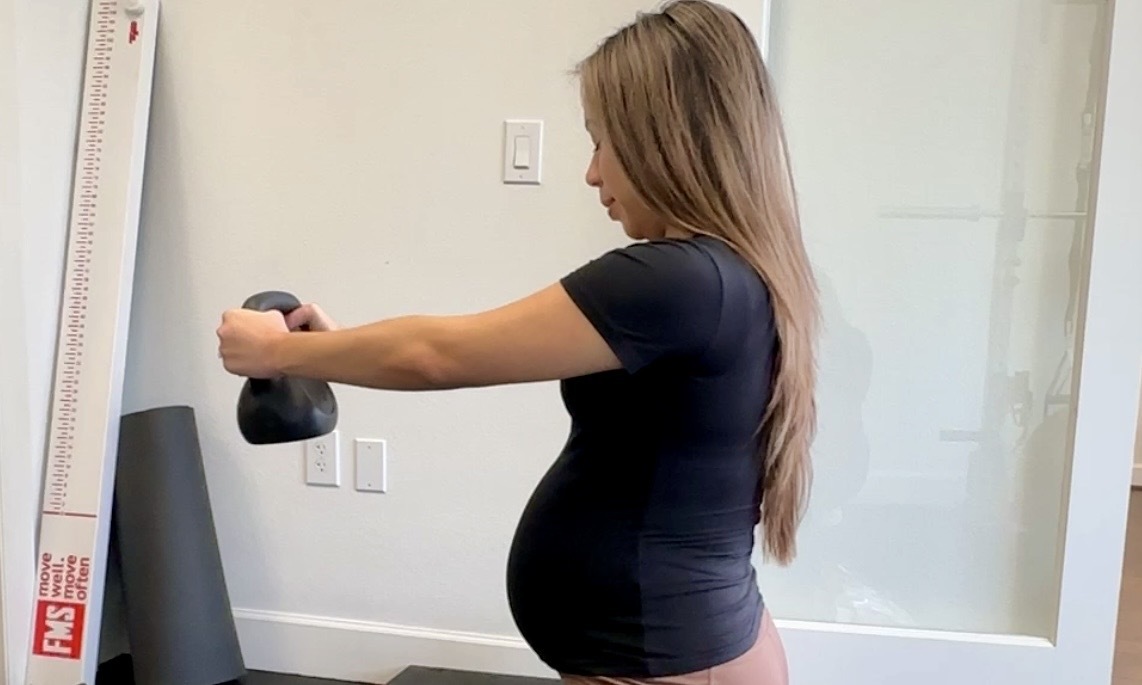
Many moms feel pretty good in the first trimester.
Then somewhere around 18 to 22 weeks… their back starts to ache.
If you're about 20 weeks pregnant and noticing new back pain, you're not alone. Second trimester back pain is extremely common.
But common does not mean inevitable. Let's talk about why it starts and what actually helps.
Already past 28 weeks? Our guide to third trimester back pain covers what changes in the final stretch. Feeling it more in your upper back or ribs? See our guide to upper back and rib pain during pregnancy.
Yes. More than half of pregnant women deal with low back pain, and for many it starts between 18 and 24 weeks as the bump grows, posture shifts, and ligaments loosen. It's usually mechanical, not an injury, and it tends to respond well to small daily changes, targeted exercise, and pregnancy-safe chiropractic care.
Why Back Pain Often Begins in the Second Trimester
Around mid-pregnancy, your body changes rapidly:
To compensate, many women:
Over time, that extra load creates irritation.
Why It Feels Worse by the End of the Day
Second trimester back pain often:
That's because the issue is usually load tolerance, not injury. Your muscles are working overtime to stabilize your changing body.
Is It a Disc Problem?
Very rarely. Most mid-pregnancy back pain is:
Not structural damage. This is important because it changes the solution.
Why Stretching Alone Isn't Enough
Most women try:
These can feel good temporarily. But if the issue is coordination and load management, stretching won't solve the root cause.
Often what helps more is:
How to Relieve Second Trimester Back Pain at Home
You can't stop your body from changing, but you can change how much strain your back takes on each day. These are the simple things I recommend to almost every mom I see in the second trimester:
If these help but your pain keeps creeping back every week, that's your body telling you it needs more support, not more stretching. That's exactly where a movement-based evaluation helps.
Back Pain at 21–24 Weeks Pregnant: The 3 Pains We See Most
Somewhere between 21 and 24 weeks, a lot of moms notice their pain changes. It's not just a tired lower back anymore. Your bump is growing faster, your center of gravity keeps shifting forward, and the hormone relaxin is loosening the ligaments around your pelvis. That combination puts new stress on three specific areas.
What it feels like: A sharp or aching pain right at the front of your pelvis, sometimes spreading into your inner thighs or groin. It usually flares when you stand on one leg, climb stairs, get in and out of the car, put on pants, or roll over in bed.
Why it happens: The two halves of your pelvis meet at a joint called the pubic symphysis. As the ligaments loosen and the pelvis carries more load, that joint can move more than it's used to, and the surrounding muscles struggle to keep it stable.
What helps:
What it feels like: Pain on one side of your low back or upper buttock, right around the dimple above your glute. It can feel achy and deep or sharp with certain movements, and often gets worse with prolonged standing, walking, stairs, or getting up from a chair.
Why it happens: Your sacroiliac (SI) joints connect your spine to your pelvis. Looser ligaments plus the extra forward pull of your growing belly mean these joints rely more on your glutes and deep core for support. When those muscles can't keep up — or you favor one side, like carrying a toddler on the same hip — one SI joint ends up doing more than its share.
What helps:
What it feels like: A quick, sharp, or pulling pain low in your belly or groin, on one or both sides. It often hits when you stand up fast, roll over in bed, cough, sneeze, or laugh, and usually fades within seconds to a few minutes.
Why it happens: The round ligaments run from your uterus down to your groin and help support it. As your uterus grows, they stretch and thicken, and a sudden movement can make them spasm. It's one of the most common second trimester complaints — and while it can be really uncomfortable, it isn't harmful.
What helps:
Call your OB or midwife right away if your pain comes with any of these:
These can be signs of something that needs medical attention, not a musculoskeletal issue. When in doubt, always check with your provider first.
The good news is that all three of these respond well to the right support. At CHIRO HAUS, we look at how your pelvis, hips, and core are working together, then use gentle, pregnancy-safe care and simple exercises to help your body handle the changes of the second half of pregnancy.
Right-Side Back Pain in the Second Trimester
A lot of moms notice their pain sits mostly on one side, very often the right. Most of the time, that's still mechanical. The usual reasons:
These usually ease with the same changes above: even out how you stand and carry, switch sides, and support your pelvis while you sleep. One-sided pain also tends to respond well to hands-on care, because we can find which side of the pelvis isn't moving well and help it share the load again.
Right-side pain that needs a call to your OB or midwife:
These aren't musculoskeletal and need medical attention right away.
What Pregnancy Chiropractic Care Looks Like at CHIRO HAUS
Second trimester care is tailored to:
We use pregnancy-safe positioning, gentle adjustments, movement-based rehab, and core and breathing coordination drills.
The goal isn't just symptom relief. It's helping your body adapt better as pregnancy progresses — so you feel stronger going into the third trimester, not more worn down.
When Should You Get Evaluated?
If your back pain is worsening weekly, interfering with sleep, limiting walking or standing, or causing sharp or radiating pain — it's worth getting assessed. Earlier support often prevents third-trimester flare-ups.
Here's how getting started at CHIRO HAUS works:
Earlier in your pregnancy? Read our guide to chiropractic care in the first trimester →
Frequently Asked Questions
Yes. Back pain is one of the most common pregnancy complaints, and for many moms it starts in the second trimester as the bump grows and posture shifts. It's usually muscular and mechanical. If it's getting worse week to week or affecting your sleep, it's worth getting checked.
Call your OB or midwife right away if your back pain comes with rhythmic cramping or tightening, bleeding or leaking fluid, fever or pain when you pee, or severe pain that doesn't ease with rest. Pain under your right ribs with a headache, vision changes, or sudden swelling also needs urgent attention.
Side sleeping with a pillow between your knees and ankles is usually the most comfortable. A small pillow or wedge under your bump and one behind your back can take extra strain off your low back and pelvis. Many moms find a full-length pregnancy pillow makes the biggest difference.
Yes, it's very common. Around 21 to 24 weeks your bump grows quickly, your posture shifts, and your ligaments loosen, so many moms notice new aches in the low back, pelvis, or hips. Common doesn't mean you have to put up with it, though. Most mid-pregnancy back pain is mechanical and responds well to movement changes and gentle care.
Pain at the front of the pelvis is often symphysis pubis dysfunction. The joint where the two halves of your pelvis meet becomes more mobile as your ligaments loosen. Keeping your knees together during transitions, sitting to get dressed, and avoiding wide stances can make a big difference — and hands-on care can help calm it down.
Round ligament pain is usually sharp and brief, triggered by sudden movements like standing up, rolling over, or sneezing, and it eases within seconds to minutes. Pain that is constant, severe, comes in a regular rhythm, or comes with bleeding, fluid, or fever is different. Call your OB or midwife right away if you notice any of those.
Yes. Pregnancy-focused chiropractic care can help restore how your pelvis moves and take pressure off an irritated SI joint. At CHIRO HAUS, Dr. Anna Hoang is Webster Technique certified and pairs gentle adjustments with exercises that build the glute and deep core support your pelvis needs.
For most healthy pregnancies, yes. Pregnancy chiropractic care uses positioning and techniques adapted for your changing body, with no pressure on your belly. We always recommend keeping your OB or midwife in the loop, and if you have a high-risk pregnancy, check with them before starting care.
If you're 20 to 24 weeks pregnant and noticing new back or pelvic pain, we'd love to help. We serve moms in Katy, Cinco Ranch, Richmond, Fulshear, and the greater Houston area.
Book a Free Pregnancy Discovery Visit →Anna Hoang
Chiropractor | BirthFit Coach | Webster Technique Certified | Graston Technique Certified | SFMA/FMS Provider
Contact Me