By Dr. Jonathan Chapa, DC | Sports Chiropractor at CHIRO HAUS, Katy TX
If you've dealt with sciatica before, you already know the drill. The sharp, burning pain down one leg. The way it flares up mid-workout or catches you off guard when you bend to pick something up. Maybe you rested, iced it, stretched your piriformis religiously, and it got better. Until it didn't.
That cycle (sciatica comes back, you manage it, it goes away, it comes back again) is the most common pattern I see in active adults and athletes here in Katy. And it almost always comes back because the root cause was never actually addressed. The pain was managed. The problem wasn't fixed.
As a sports chiropractor, I work with CrossFit athletes, HYROX competitors, runners, and gym-goers across Katy, Cinco Ranch, and the greater Houston area who are dealing with this exact pattern. This post is my honest breakdown of why sciatica keeps recurring in athletes, and what a movement-based approach actually looks like when we stop treating symptoms and start treating the system.
First, What Is Sciatica, Really?
Sciatica is a symptom, not a diagnosis. It describes pain, numbness, or tingling that travels along the path of the sciatic nerve: from the lower back through the glute, down the back of the leg, and sometimes into the foot.
The cause can vary, which is exactly why a one-size-fits-all treatment approach tends to fail athletes. The most common sources I see in active patients:
- Lumbar disc herniation: a bulging or herniated disc pressing on a nerve root in the lower spine. Very common in athletes who load the spine repeatedly under flexion. Think heavy deadlifts, kettlebell swings, rowing.
- Piriformis syndrome: the sciatic nerve runs underneath (and sometimes through) the piriformis muscle in your glute. When that muscle is tight or overworked, it can compress the nerve. This is common in runners and cyclists.
- Lumbar stenosis: narrowing of the spinal canal that pinches the nerve. Less common in younger athletes but worth ruling out.
- Sacroiliac (SI) joint dysfunction: the SI joint sits right where your spine meets your pelvis. Dysfunction here can mimic or contribute to sciatica, especially in athletes with asymmetrical loading patterns.
Without knowing which of these is driving your symptoms, you're guessing. And guessing is why sciatica keeps coming back.
Why Athletes Are Especially Prone to Recurring Sciatica
Here's the uncomfortable truth: the same qualities that make you a good athlete can make your sciatica worse if you don't address the underlying movement dysfunction.
You train through pain.
Most athletes I see have been managing sciatica for months, sometimes years, before they come in. They scaled back temporarily, felt better, and jumped back into full training. That cycle reinforces the problem because the tissue healed but the mechanics that caused the injury never changed.
Your training amplifies asymmetries.
Repetitive loading under an asymmetrical pattern (favoring one side on a barbell, a subtle hip shift at the bottom of a squat, a slight lean on the ski erg) compounds over thousands of reps. Small movement problems become big structural problems over time.
You're relying on passive recovery.
Foam rolling, stretching, anti-inflammatories, and rest can reduce symptoms temporarily. But none of them change the underlying cause, which is usually a combination of motor control deficits, mobility restrictions, and load management issues that the passive approach never touches.
Your core isn't doing what you think it is.
A lot of athletes assume they have a strong core because they can do toes-to-bar or hold a two-minute plank. But the kind of deep core stability that protects your lumbar spine under dynamic load is a completely different thing. If your superficial abs are doing all the work, your lower back compensates, and over time, that compensation becomes sciatica.
What I Actually Do Differently as a Sports Chiropractor
When an athlete comes into CHIRO HAUS with sciatica, here's what the process looks like, because it's not a standard chiropractic visit.
Step 1: Find the actual source.
Before I touch anything, I assess. I use the Selective Functional Movement Assessment (SFMA) to evaluate how your spine, hips, and lower extremities are moving, both where you have pain and where you don't. Most of the time, the problem driving sciatica isn't just at the site of pain. There's a chain of dysfunction above or below it that's putting the disc or nerve under load it can't handle.
Step 2: Treat the tissue and the movement pattern.
Hands-on treatment (joint mobilization, soft tissue work, nerve mobilization) can reduce irritation and restore mobility. But I treat it as the entry point, not the solution. If all we do is reduce pain and send you back to training, we're back to the same cycle in six weeks.
Step 3: Rebuild the system that failed.
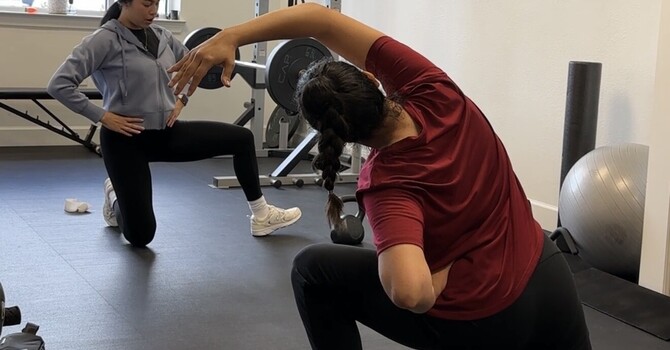
Using DNS (Dynamic Neuromuscular Stabilization) principles, I work on restoring how your nervous system coordinates movement, specifically the deep stabilizers of your lumbar spine and pelvis that should be protecting your discs and nerve roots under load. This isn't crunches and bird dogs. It's specific, progressive work that directly ties back to the demands of your sport.
Step 4: Build a program you can actually do.
Every patient at CHIRO HAUS gets a TrueCoach home program: a custom exercise plan built around where you are in recovery and what you're training for. Your recovery doesn't stop when you walk out the door. The work you do between sessions is often what determines whether this is a one-time fix or another entry in the cycle.
Step 5: Have a clear conversation about load management.
I'm not going to tell you to stop training. That's not realistic and, honestly, not always necessary. But I will tell you what to avoid, what to modify, and how to keep moving without adding to the problem. Athletes respond well to having a specific plan, not just "rest and see how it goes."
Red Flags: When Sciatica Needs More Than Chiropractic Care
I want to be direct about this, because I think it matters. Most sciatica in athletes is mechanical, meaning it responds well to movement-based care. But some presentations need a different level of evaluation first.
Come see us right away, and tell us about these symptoms specifically, if you're experiencing:
- Loss of bladder or bowel control
- Numbness or weakness in both legs simultaneously
- Progressive leg weakness that isn't improving
- Severe pain that came on suddenly without a clear mechanism
- Saddle anesthesia (numbness in the inner thighs or groin area)
These can indicate a more serious issue that needs imaging and possibly a referral. At CHIRO HAUS, we don't guess. If something needs a second set of eyes, we'll tell you that directly and help coordinate the right next step.
What to Expect in Terms of Timeline
I know athletes want a straight answer on this, so here's my honest take:
For most athletes with mechanical sciatica, significant improvement happens within 4 to 8 sessions with consistent home program follow-through. That's not a guarantee. It depends on how long the issue has been present, how the tissue responds, and whether you're able to modify training to avoid aggravating it during care.
What I can tell you is that athletes who engage with the process (doing the home program, showing up consistently, and communicating when something changes) do significantly better than those who come in for a few treatments and disappear when the pain drops. The pain dropping early is good news. It means we can use that window to fix the actual problem.
Why Athletes in Katy Choose CHIRO HAUS for Sciatica Treatment
CHIRO HAUS isn't a traditional chiropractic clinic, and that distinction matters when you're an athlete dealing with a recurring problem. Here's what's different:
- 1-on-1 with a doctor every session: no techs, no shared treatment rooms, no assembly-line care. You work directly with me.
- SFMA & FMS movement screening: we find what's driving the problem, not just where it hurts.
- DNS-informed stabilization work: deep core and neuromuscular retraining specific to your sport and your body.
- TrueCoach home programming: a custom plan built around your recovery timeline and training goals.
- Athlete-first communication: I'll tell you what to keep doing, what to modify, and what to cut. No vague advice.
We work with CrossFit athletes, HYROX competitors, runners, and active adults throughout Katy, Cinco Ranch, Richmond, and the greater Houston area. If you're tired of managing sciatica and want to understand what's actually driving it, this is the kind of care built for that.
Ready to Stop Managing It and Start Fixing It?
If sciatica keeps interrupting your training and you're ready for a different approach, the next step is a free Discovery Visit at CHIRO HAUS. In 30 minutes, we'll identify what's actually driving your symptoms and build a clear plan to address it.
No guesswork. No passive table time. Just a straight assessment from a sports chiropractor who works with athletes like you every day.
Frequently Asked Questions
Can a chiropractor help with a herniated disc causing sciatica?
Yes. In many cases, movement-based chiropractic care is highly effective for herniated disc-related sciatica. The goal isn't to "put the disc back in" (that's not how it works), but to reduce mechanical load on the affected nerve root, restore mobility, and rebuild the stabilization patterns that protect the disc under load. For most athletes, this approach produces meaningful improvement without surgery.
Should I stop training while dealing with sciatica?
Not necessarily, but you should modify. Complete rest isn't usually the answer, and it's often counterproductive for athletes whose identity and recovery are tied to movement. What matters is understanding which movements are loading the irritated structure and avoiding those specifically while continuing everything else. I build this modification plan as part of every patient's care.
How is a sports chiropractor different from a regular chiropractor?
A sports chiropractor has additional training in how the body moves under load, how athletic injuries develop, and how to build rehabilitation plans that account for the demands of sport. At CHIRO HAUS, that means movement screening, neuromuscular retraining, and sport-specific programming, not just spinal manipulation and send-home exercises.
How long does sciatica take to heal?
For most athletes with mechanical sciatica, significant improvement happens within 4 to 8 sessions. Longer-standing cases or those with more significant nerve involvement may take longer. The single biggest predictor of faster recovery is consistent engagement with the home program between sessions. The in-clinic work and the home work compound each other.
Do you treat sciatica differently depending on the sport?
Absolutely. A CrossFit athlete with sciatica from heavy barbell work needs a different approach than a runner whose sciatica developed from piriformis irritation over 40+ weekly miles. The assessment tells us what structure is involved and how your training pattern contributed, and the plan is built from there, not from a generic protocol.
Where is CHIRO HAUS located?
CHIRO HAUS is located in Katy, TX and serves athletes and active adults from Katy, Cinco Ranch, Richmond, Fulshear, and the greater Houston area. Visit www.thechirohaus.com to book your free Discovery Visit.