When Can I Start Working Out After Having a Baby? A Katy, TX Chiropractor's Guide
The six-week clearance is a checkpoint, not a starting gun. Here is what your body is actually ready for, and when.
Your six-week appointment is on the calendar. You are counting down to the words "you're cleared." And then what? Most moms walk out of that visit with permission and no plan. Here is what the six-week clearance actually means, what your body is ready for at each stage, and how to tell the difference between normal and a signal worth listening to.
Not sure where your body is right now? A free Discovery Visit at CHIRO HAUS gives you 30 minutes with a doctor to find out.
What the Six-Week Clearance Actually Means
The six-week postpartum visit is a medical checkpoint. Your provider is confirming that your incision or tearing has healed, that bleeding has resolved, that your uterus has returned to size, and that there are no signs of infection or complication. That is important, and it is worth celebrating.
But that appointment is rarely a movement assessment. Nobody watches you squat. Nobody checks whether your deep core is coordinating with your breath, whether your pelvic floor can manage pressure under load, or whether your hips are moving the way they did a year ago. Those things are not part of the standard visit, and they are exactly the things that determine whether returning to exercise feels good or sets you back.
The honest answer to "when can I start working out again" is that light, intentional movement can begin well before six weeks. Real training capacity comes back gradually over the months that follow. The timeline depends far more on how your body is moving than on which week you are in.
The Four Phases of Returning to Exercise Postpartum
Tissue healing follows a sequence. Skipping ahead is where most postpartum pain problems begin, so the order below matters more than the week numbers attached to it.
Reconnect
Before strength comes coordination. The goal here is re-establishing the conversation between your diaphragm, deep core, and pelvic floor, which pregnancy and delivery interrupt.
- Diaphragmatic breathing, lying down and then seated
- Gentle pelvic floor contraction and full relaxation
- Short walks, progressed by feel rather than by distance goals
- Easy hip and rib cage mobility
Rebuild
Now you start reintroducing the patterns real life demands, at loads your tissue can currently handle. Carrying a car seat is a loaded carry whether you programmed it or not.
- Dead bugs, bird dogs, and anti-rotation work
- Bodyweight and light goblet squats, hip hinges
- Single-leg work: step-ups, split squats
- Low-impact conditioning on a bike or rower
Reload
Impact and meaningful load enter here, and this is the phase most worth being assessed before starting. Running is not a resumption of walking. It is roughly two to three times bodyweight through the pelvis, repeatedly.
- Walk-run intervals progressed over four to six weeks
- Progressive loading on squats, deadlifts, and presses
- Loaded carries and sled work at submaximal effort
- Ongoing attention to how you feel the day after, not just during
Perform
Sport-specific training and competition prep. If you are working toward a race, a barbell number, or an event, this is where that becomes the focus. The foundational work does not get abandoned here, it gets integrated into how you move under heavier load.
If your goal is competitive fitness specifically, we go much deeper on programming and event demands in our guide to returning to HYROX after baby.
Signals Worth Paying Attention To
These are not signs you have done permanent damage, and they are not a reason to stop training. They mean your current program is slightly ahead of what your tissue can manage right now, which is a solvable problem.
- Leaking with jumping, running, or heavy lifting
- A feeling of pelvic heaviness or pressure, especially later in the day
- Pain at the pubic bone, tailbone, or SI joints
- Low back pain that shows up with training and lingers after
- Doming or coning along the midline during core work
Leaking in particular gets brushed off as an unavoidable part of motherhood. It is common, and it is also treatable. Common and normal are not the same thing.
Common Questions About Postpartum Exercise
Can I start moving before my six-week appointment?
Usually yes, with the caveat that this means gentle, restorative movement rather than training. Breathing work, short walks, and light mobility are appropriate for most uncomplicated deliveries within the first weeks. Cesarean recovery follows a different timeline and warrants a conversation with your provider first.
How do I know if I have diastasis recti, and does it stop me from exercising?
Some separation of the abdominal wall is present in nearly every pregnancy, and for many women it resolves substantially on its own. What matters more than the gap width is whether you can generate tension across the midline under load. It rarely means you cannot exercise. It usually means certain movements need to be modified while you rebuild that capacity.
When can I start running again?
Twelve weeks is the commonly cited earliest point, and it should follow a functional assessment rather than a calendar date. Running is high-impact and repetitive, and the pelvic floor has to manage that load hundreds of times per mile. Many moms are ready around then. Many need longer, and that is not a setback.
Does breastfeeding change what I can do?
Relaxin stays elevated while nursing, which affects joint laxity somewhat. It does not prevent you from training. It does mean paying attention to hydration, adequate calories, and being realistic about intensity on low-sleep weeks.
What if I am a year or more postpartum and still hurting?
Then it is worth getting assessed, and the window has not closed. We regularly see moms years out from delivery whose symptoms resolve once the underlying movement pattern is addressed. Time alone does not fix a coordination problem, but the right work still does.
How We Approach This at CHIRO HAUS
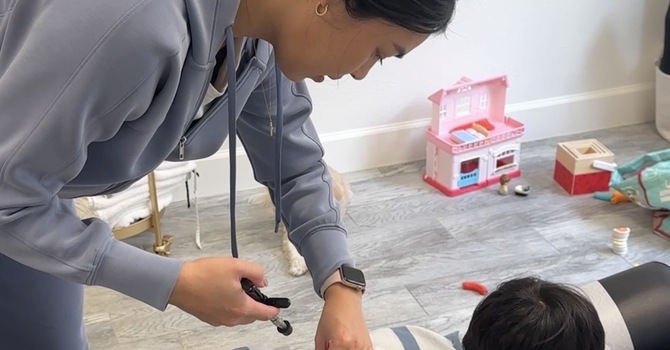
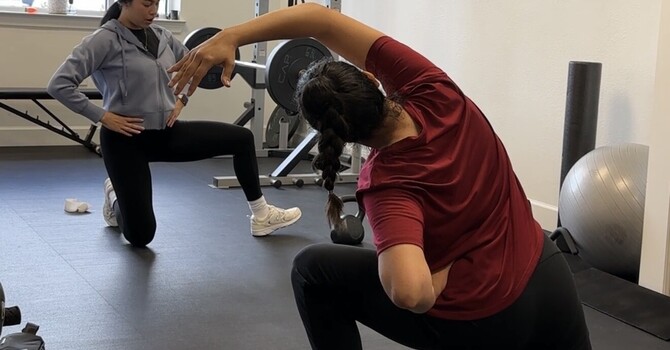
Every postpartum patient here starts with a full movement screen using SFMA and FMS methodology. We look at how you move globally first, then narrow down to where the actual breakdown is happening, because pain is often not located where the problem is. Low back pain during a deadlift might trace back to hip mobility, pelvic floor timing, or core stability, and the screen tells us which one to address first instead of guessing.
From there you get a plan: hands-on care where it is indicated, corrective work done with you in session, and a TrueCoach program you can follow at home or at your gym between visits. Every session is 1-on-1 with your doctor. We do not double-book, and you are not passed between rooms.
The goal is not for you to need us indefinitely. It is for you to understand your own body well enough that you do not have to wonder whether a movement is safe.
Find out where your body actually is
A free Discovery Visit is 30 minutes with one of our doctors to talk through your goals, look at how you are moving, and figure out whether we are the right fit. Serving Katy, Cinco Ranch, Richmond, Fulshear, and the greater Houston area.
Book Your Free Discovery Visit →Anna Hoang
Chiropractor | BirthFit Coach | Webster Technique Certified | Graston Technique Certified | SFMA/FMS Provider
Contact Me